


Why polka dots are back, and how to use them well in a family home
The Print We Keep Circling Back To
A cushion in a friend's living room. A vanity tray at the homewares store. A tablecloth that catches your eye at a market stall you weren't planning to stop at. Somewhere over the past few months, polka dots started reappearing in small, quiet ways, and once you notice one, you start noticing them everywhere.
We're not a trend-led brand. We don't design around what's popular, and we're usually the last to jump on anything moving quickly through Instagram. But when this pattern kept coming up while we were developing new designs for our Signature Collection, it made sense for reasons that went well beyond timing. This piece is about why the trend is happening, how to use it in a way that actually suits a family home, and why we think a rug does far more for a room than bedding ever could.
Why Polka Dots Are Having a Moment
A few things are driving this at once.
Fashion is part of it. Polka dots moved through the spring and summer runways this year in a more grown up, tailored form than the version most of us grew up wearing. Interiors tend to follow fashion by six to twelve months, and that lag is exactly what we're seeing play out now.
There's also a broader shift underway in how people want their homes to feel. Pinterest's most recent trend report points to a move away from curated, look at me styling and toward comfort and personal touches instead. Polka dots suit that mood well. They're playful without being loud, and most of us already carry a familiar, easy association with them from somewhere in our own childhood.
The colour story underneath it matters too. Chocolate brown has become one of the most used tones in home decor this year, and polka dots are constantly being paired with it: a cream base, a warm brown dot, nothing else competing for attention. That pairing is a big part of why the trend feels more considered now than it did the last time dots came around.
You can see all of this converging locally. Adairs now has a dedicated Polka Dots & Spots range sitting alongside their Chocolate Hues and Gingham collections. Kmart's spotted bedding has been one of the most shared bedding styles on social media this season. Across other homewares retailers, the same dot and neutral combination keeps turning up in cushions, lighting and tableware, which is usually a reliable sign a print has moved past a passing moment.
The Idea Behind the Trend
Polka dots work well right now because they sit inside a bigger shift toward calmer, more considered spaces, sometimes described as warm minimalism. It's the same instinct behind the recent move toward simpler, more grown up styling in kids' rooms, where the space is treated with the same care as the rest of the house rather than set apart as a separate, louder zone.
It helps to understand why the print itself works so well. Dots are one of the few bold patterns that behave like a neutral. The shapes are simple and evenly spaced, so a room built around them stays calm rather than busy. Get the scale and colour right, and the pattern does most of the styling work for you, which is exactly what makes it such a forgiving place to start.
How to Use Polka Dots Without the Room Feeling Busy
A few practical rules make the difference between a room that feels styled and one that feels like a novelty.
Pick one hero print. Let the dot be the pattern in the room, on the rug, the bedding, or one cushion, not all three at once. Once it's in, resist adding another loud print alongside it.
Keep it to two colours. The best looking polka dot rooms right now are almost always one dot colour against a neutral base: cream and sage, oat and blush, white and chocolate brown. A third colour tends to make the whole thing feel less deliberate.
Go bigger, not smaller. Oversized, spaced out dots read as considered and grown up. Small, tightly packed dots read as busier and more childlike. If you want a piece that works in a living room as easily as a nursery, choose the larger scale.
Add texture, not more pattern. A timber shelf, a linen throw, a boucle cushion, a worn leather stool. These give the room depth so the dot isn't doing all the work on its own.
Use chocolate brown as your anchor. Given how strongly it's trending alongside dots, lean into it with intent rather than as an afterthought: a throw, a timber frame, a woven basket. It grounds a playful print and keeps a room from tipping into kids' theme territory.
Where to Actually Invest When You're Decorating
Bedding is meant to be temporary. It gets refreshed with the seasons, updated for a birthday, changed as a child grows out of one phase and into another, and that impermanence is the whole point of it. You can bring a trend like this into bedding with almost no risk, because you were always going to change it again in a year or two.
A rug carries more weight than that. It's the largest single colour and pattern decision in a room, and it isn't something you're meant to replace every time a trend moves on. So it's worth asking a slightly different question than the one you'd usually ask in a homewares aisle. If you're drawn to this print, is bedding really the best way to bring it home, or is there a version built to outlast the trend that introduced you to it in the first place?
We'd say the second option, and not simply because we make rugs. Kids grow out of bedding fast. The sheets that suited a toddler rarely suit the same child a few years later, printed with characters they've already moved on from. But children don't grow out of good design at anywhere near that rate. A well chosen rug, in a genuinely timeless pattern and colour, tends to move with a family rather than get replaced by one.
In practice, that looks like this. A rug often starts life in a nursery, softening the room underfoot and quietly setting the colour palette for everything built around it. As your child grows, that same rug can move into a playroom, holding up to daily mess and constant use in a way bedding never has to. Later still, because it was never trend specific to begin with, it can settle just as comfortably into a bedroom, a reading corner, or a family living space. Bedding rarely makes that journey. A good rug usually does, and it tends to carry the memory of every room it's passed through along the way, the tea parties, the pillow forts, the first steps taken across it.
There's a practical reason this matters beyond sentiment. A rug also does something bedding simply can't. It sets the tone for the whole room, not just for one piece of furniture within it. Most colour palettes build outward from a rug rather than toward it. Get that one decision right early, and everything else you choose for the room becomes noticeably easier to style.
This is really the heart of what we believe about decorating a family home. The biggest, most enduring investments should go toward the pieces that move with you, not the ones you'll be swapping out again next season.
Where Polka Dot Fits In
While developing the next stage of our Signature Collection, this design, which we're calling Polka Dot, kept earning its place in the conversation. Not because it was trending, but because it had the qualities we always look for. It's calm, easy to style, playful without feeling childish, and just as at home in a living room as in a nursery.
It comes in four colour ways that follow the same simple pairing this trend does so well: Sage, Sky Blue, Blush and Mustard, each set against our soft, undyed base. We didn't choose these to chase a moment. They're the same considered palette we use across the rest of the Signature Collection, which is why this rug will still make sense in a room long after the trend itself has quietly moved on.
That's really the distinction we'd want a reader to take from this piece. This isn't our take on the polka dot trend. It's a timeless design that happens to suit what's trending right now, and that difference is exactly why it earned a place on the shortlist at all.
Polka Dot hasn't officially launched yet. It's one of three new designs, alongside Diagonal Stripe and Wave, that we're putting to our community before deciding what earns a permanent place in the Signature Collection. Which is where you come in.
An Invitation Into How We Design
We wanted this next stage of the Signature Collection to include the people who actually live with these rugs every day, so rather than deciding alone, we're opening the process up.
Download whichever of the three new designs speaks to you most, then style it however feels natural: a mood board, a Pinterest board, a full room concept, even an AI generated interior. There's no single right way to approach it. Share your version on Instagram, tag @hunterandnomad, and use #HNDesignChallenge. A few favourite entries will receive the rug they designed with ahead of its official launch, and with the support of some brand partners, a handful of concepts may even become real, styled rooms.
If Polka Dot is the design you keep coming back to, this is genuinely your chance to help decide whether it makes the range.
Explore and download the three designs: hunterandnomad.com.au/pages/design-challenge
Shop the Look
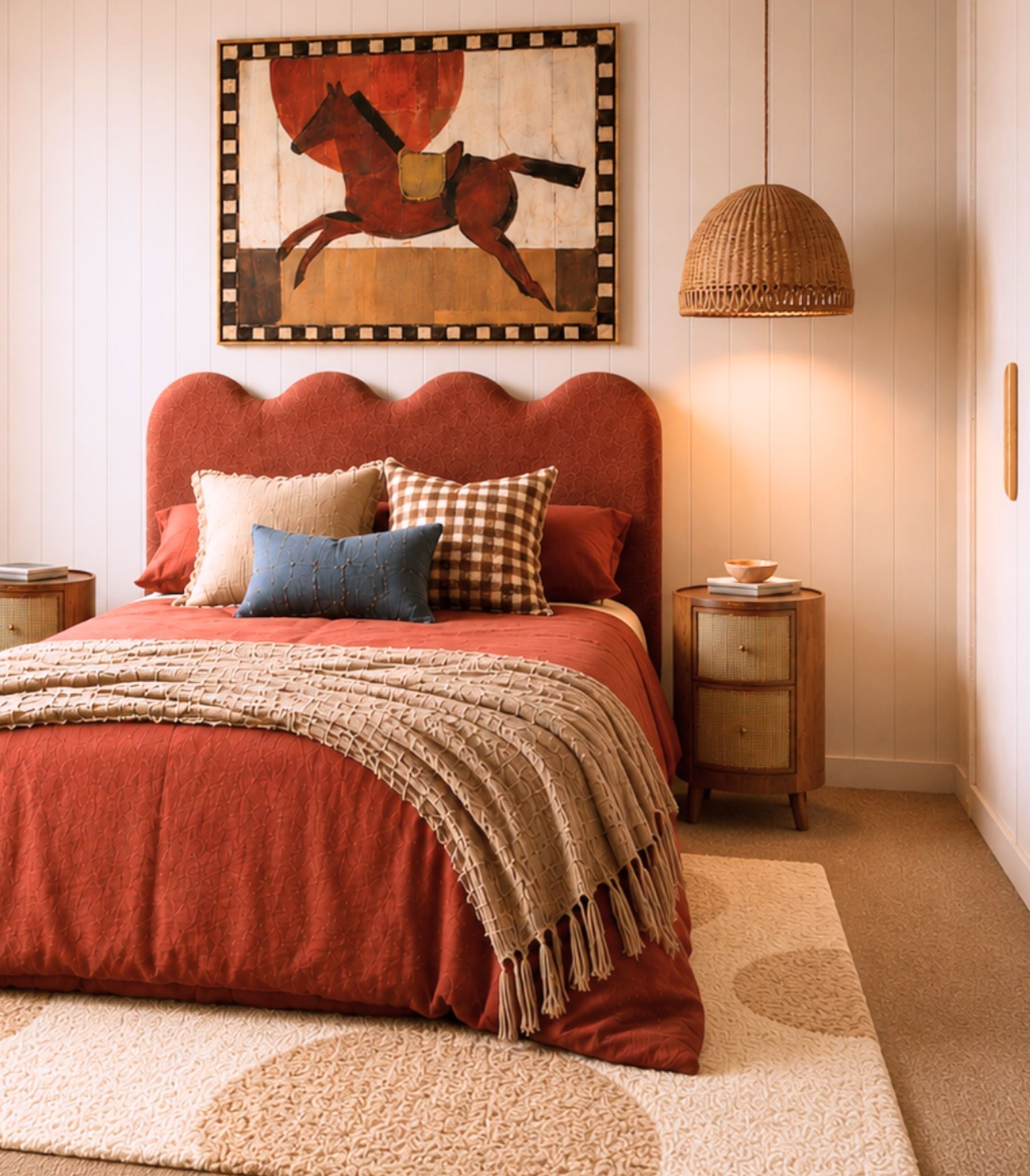
The Considered Room A warmer, slightly vintage leaning pairing. Polka Dot as the base layer, with heirloom style pieces layered over the top: framed art, a woven pendant shade, worn timber furniture, rich chocolate or burgundy bedding. This shows the rug working in a fully grown up space, not only a kids' room.


Good Design Doesn't Ask to Be Noticed
Trends like this one will keep moving through cushions and bedding for as long as the mood lasts, and there's real pleasure in enjoying that while it's here. But the pieces that end up meaning the most in a family home are rarely the ones that were trying hardest to be noticed. They're the ones that were simply well made, well considered, and built to hold up to real life.
That's the kind of decorating we believe in. Not chasing what's next, but choosing what will still feel right long after everyone has stopped talking about it.
Read more
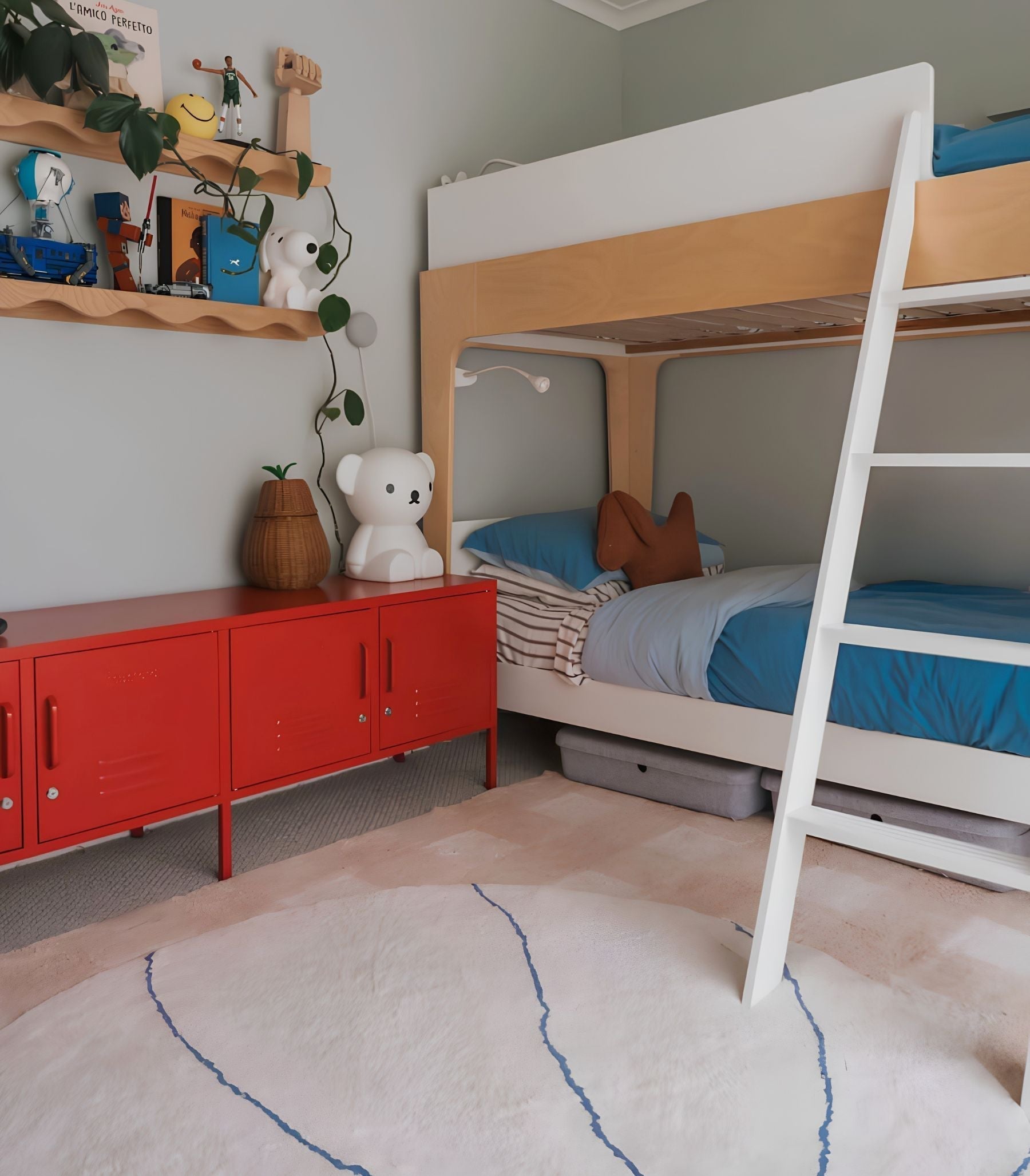
Winter has a way of making you notice every room differently. The light changes, the evenings get longer, and suddenly the rug that felt fine in summer looks like it’s missing something. The good n...
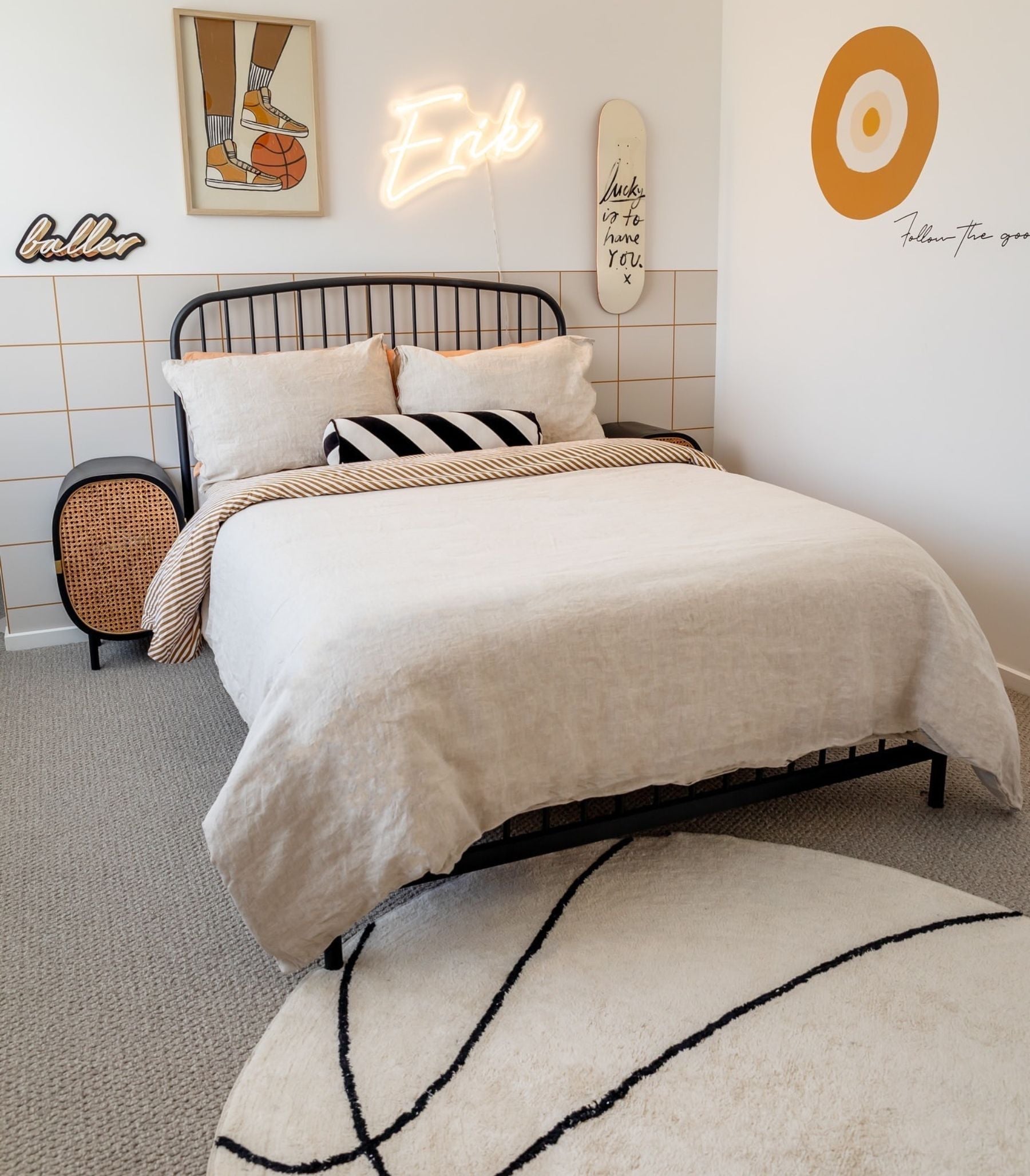
Designing a boys bedroom is one of my favourite spaces in the home. Then again, with three boys and no girls in this house, I don't really have much choice! It's where personalities begin to shine,...
Leave a comment
All comments are moderated before being published.
This site is protected by hCaptcha and the hCaptcha Privacy Policy and Terms of Service apply.